“He was born in the summer of his 57th* year
Coming home to a place he’d never been before.
He left yesterday behind him, you might say he was born again.
You might say he found a key for every door…”“Rocky Mountain High,” John Denver
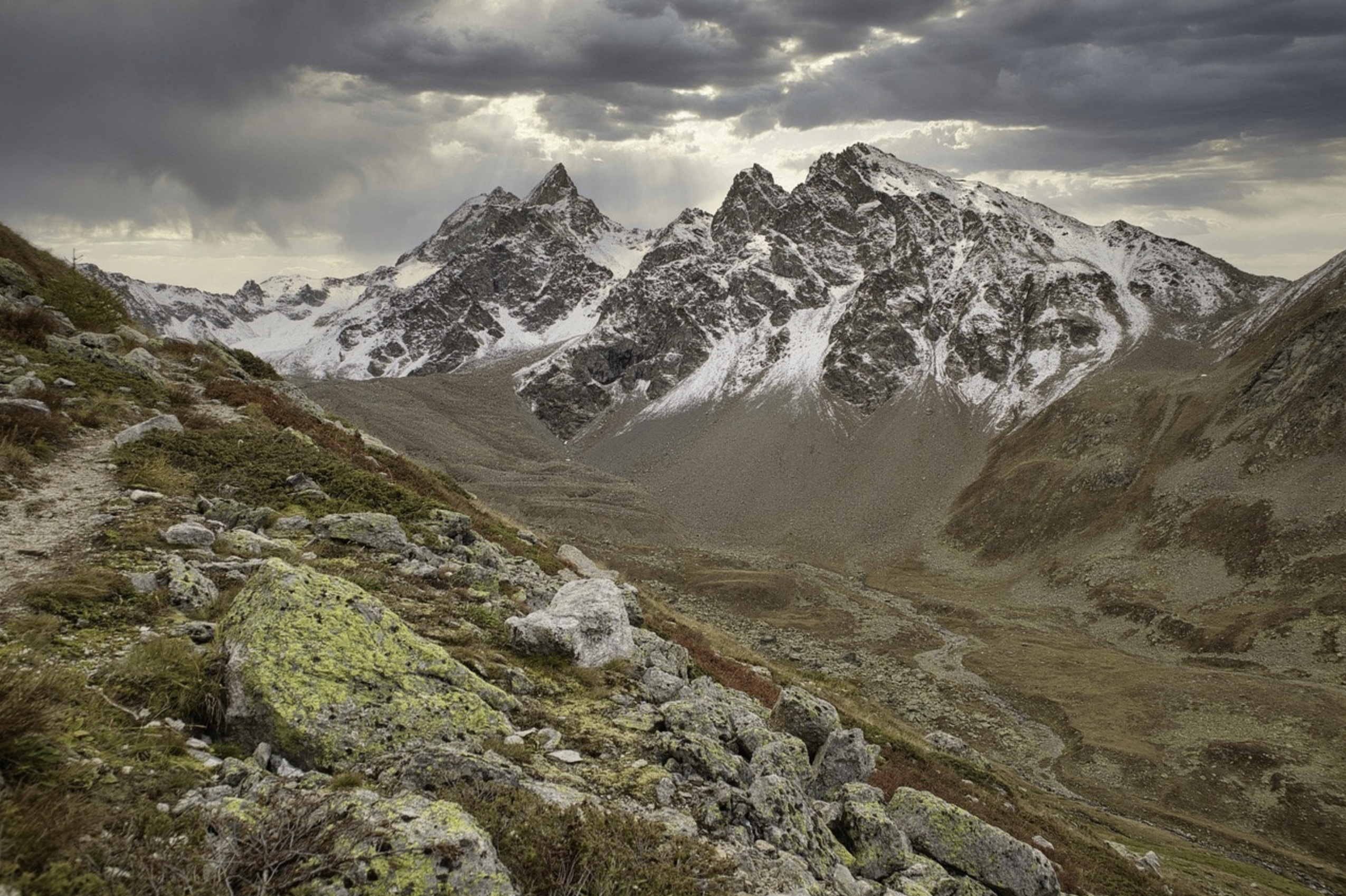
Recently, I heard these lyrics made popular by folk singer John Denver some years ago, and I realized how well I related to them (*with one variation– my 57 years as opposed to his 27!). The story behind the song goes that as a young adult John discovered something magnificent that changed his life. It had always been there, but he had never encountered it, until one beautiful night when he observed a dazzling meteor shower in the crisp clear skies of the Colorado Rocky Mountains. He would never be the same.
Such was the case with me. One day I, too, discovered something truly amazing that changed my life forever. It was always there, closer than Colorado from my rural Pennsylvania home. All my life it had been just down the street, or over in the next town, but I was blind to its beauty. The place is known as the Catholic Church, and it is there that I have more fully come to understand what it means to be born again; and it is there I have found a key for every door. In this setting, once unknown, an Evangelical Protestant pastor has experienced an environment where nothing has changed, but everything is different.
How can something be so much the same and, at the same time, so dissimilar? It is a paradox I wrestled with for some seven years before my conversion. Ever so slowly, the pieces came together to expose a beauty beyond compare. Each one of us have those transformational moments in our lives where there is a before and an after event that changes our lives forever; some of us have many of them.
It may be the moment we meet the love of our lives; from that day on, we know things will never be the same. It may be the birth of a child or, in the case of my wife and I, the adoption of a teenager after 30 years of having an empty nest! Instead of diapers and nightly feedings, we went straight to teenage attitude. Needless to say, life changed on a dime.
Human history itself has had such moments. Western civilization recognizes such in its A.D. and B.C. delineations. Jesus himself marks a moment in time when the before and after are radically different. And, the Church He instituted from its earliest days could testify to the transformation. A moment called Pentecost changed fearful disciples into Spirit-filled leaders who in their generation “turned their world upside down (Acts 17:6)”. The Roman Empire had met her match.
While I speak of such lofty events, my personal transformation is hardly worthy of such association. Yet revolutionary for me, it most certainly was. I was a small town Protestant pastor, in a modest Evangelical denomination. The Wesleyan Church was the denomination of my upbringing, my father himself a full-time Wesleyan pastor for some forty years before official “retirement.” I then spent some ministerial time in the Assemblies of God, as well as layman service in the United Methodist Church, my wife’s denomination when we first met. It is the Wesleyan Church, though, where I had a consistent and fruitful ministry for some twenty-five years.
My involvement in the church extended beyond the local congregation to serve on the Western Pennsylvania District Board of Administration for ten years as District Secretary and Secretary for the Board of Ministerial Development, the second Board handling the ordination process for those called to credentialed ministry. It was in my District involvement that a question of doctrine came before the board, on which there was significant difference of opinion. From this, a series of events transpired which transformed me forever.
The question under consideration is not signficant to this story, but passions ran high on both sides of the issue. In this particular case, I found myself in the minority and began to question my position on the matter. In an effort to more thoroughly research the topic, I did what any person would do in our modern age—I googled it! This search directed me to an unfamiliar place and to people I barely knew.
I discovered a church not 200 years old, but 2,000 years old, finding scholars who spoke with great wisdom not in recent centuries but in a distant millennia, and insights of a nature far superior to much of what I had embraced. My first mentor in this new world was St. John Chrysostom, who set me straight on the matter in question. But, now, the door was open. Who was this unfamiliar man with a strange name? Who were these other, “fathers” of the faith, with such keen insight and depth of knowledge? Why had I heard so little about them as a born-again, Bible-believing Christian? The answers to my initial questions were to become quickly all too clear. These men were Catholic to the core. They loved the Holy Scriptures every bit as much as me, but theirs was a Catholic interpretation, the first interpretation, and in most cases, the only interpretation for 1,500 years.
As I studied, I realized my Protestant understanding of Christianity was a relatively late and very novel innovation to an ancient and established faith. I became aware that the question was not, nor had it ever been, a truly biblical one. The Church, from day one, had always held her sacred text close to her heart. The question was one of authoritative interpretation and the role of God’s Word in the ongoing life of the Church. I had made a journey upstream to the headwaters of my Christian faith and tasted a refreshing purity, the likes of which I had never known before.
Learning From The Fathers
Once one begins to sit at the feet of the early Church Fathers, it is hard to walk away. The more I heard, the more I wanted to hear. Not that this was by any means easy listening. Many an instruction left me on my knees searching the Scriptures and my own heart. More than one trip home from the office was filled with tears as I shared with my wife almost daily discoveries. The Church Fathers turned me inside out, upside down, a sharp turn to the right, a movement to the left, an about face. Like Star Trek, “boldly going where I had never gone before,” but with fear and trembling moving forward, following holy men and a young church dynamically defending the faith entrusted to them. These were the great defenders of orthodox Christianity protecting Trinitarian doctrine, proposing the canon of Scripture, while all the while teaching baptismal regeneration, the communion of the saints, and the Real Presence of Christ in the Eucharist.
The men who gave us the Nicene Creed would be as uncomfortable with me as I was with them at the start of my journey. “I believe in one holy catholic and apostolic Church; I acknowledge one baptism for the remission of sins; I look for the resurrection of the dead, and the life of the world to come.” I could give lip service to their creed, but I certainly would have had to explain away what they intended to teach. “One holy catholic”: “one” could only be imagined in some mystical abstract sense of an invisible church of all believers. “Holy” – I suppose that statement might be a struggle no matter which side of the fence you find yourself on. “Apostolic” – perhaps, but only in the sense of following their writings and certainly not in any linear, historical fashion. “Baptism for the remission of sins” – really? This was far from my understanding as an Evangelical protestant. Baptism was an act of obedience to a command given to those already born again, a symbol — a sacred symbol, but none the less, just a symbol. In the administering of baptisms, I would declare, “Baptism is not itself the door to salvation, but rather is an outward sign of the new birth which God has wrought in your heart.” This did not sound like quite the same thing to me. St. John Henry Newman said it best, “And this one thing at least is certain; whatever history teaches, whatever it omits, whatever it exaggerates or extenuates, whatever it says and unsays, at least the Christianity of history is not Protestantism. If ever there were a safe truth, it is this.”
I mused that while the early Church Fathers might have something to say, there was a huge difference between them and the modern Catholic Church with all her smells, bells, and pagan perversions. My research led me from the past to the present which I presumed would stop the expedition in its tracks. I started to read the Catechism of the Catholic Church and the documents of the Second Vatican Council as I thought to myself, “you cannot get more Catholic than that.” Far from offense, I found these to be some of the most profound and scholarly documents I had ever read. To be sure there were Mary-type issues that challenged my Protestant sensibilities. But far more common were core elements of the faith, defended and proclaimed in a way that caused me to say “amen.” Pull out a few Catholic expressions that would give the origin of the document away, and any Bible believing Evangelical Protestant would be proud to have their denomination produce such an outstanding definition and defense of the faith.
Ever more loudly the question became, “What am I protesting?” Seeds were being sown, and as difficult as it was, I was attempting to be fertile soil. So much within me resisted these Catholic themes, yet the evidence increasingly led me to believe that there was abundantly more to the Christian faith than I had ever been led to believe or embrace. What do I do with my discoveries?
After several years of personal study, another defining moment occurred. It came by way of an invitation. An elderly parishioner in my congregation had a daughter who worked as a nurse in a local monastery. I was given an invitation to speak at an ecumenical luncheon held there that was called “Lunch with the Lord.” Many priests and pastors had been invited over the years to share in this simple soup and sandwich gathering. When invited, I thought “Sure, why not?”, little realizing the new world I was entering. The original contact was uneventful, a nice lunch with a small group of good people. After speaking at the luncheon, my wife and I were invited to return at another time for a tour of the monastery. We accepted, as it sounded interesting. And so a date was set.
Time At The Monastery
St. Joseph’s Monastery was located in St. Mary’s, PA. As the name suggests, this is a predominately Catholic town in the central Pennsylvania mountains. The town was founded by German Catholics seeking freedom from persecution in the 1800’s. St. Joseph’s Monastery was the oldest Benedictine Monastery in the United States. (I say “was”, because it has since closed due to dwindling numbers and the age of the sisters.) Our tour was provided by a saintly sister named Victoria, who became a very important person to me through my conversion experience. Although she had to relocate to a monastery in Chicago, we remained in close contact until her death. This little sister took us on a wonderful tour of St. Joseph’s. The tour was supposed to last about an hour, but we were there the entire afternoon. All was strange to my wife and I.
As revivalist Protestants we were surrounded by high church sounds and symbols. “What does that mean? Why do you do that?” These were the questions asked repeatedly. By God’s grace we were given someone who could answer our questions as again and again I recognized elements of the ancient Church that I had, to this point, only read about in my studies. Perhaps, the best word I can use to describe my experience is overwhelmed. It was spiritual, intellectual, and sensory overload.
Everywhere I looked, everything I heard, and even what I smelled, spoke to me of God Almighty who made heaven and earth and revealed Himself in the Incarnate Son. (In time, I would come to discover that the center of it all was a meal bar none.) At the same time, God was both transcendent and tangible, so far beyond me, yet meeting me where I lived. I had always known of his incarnate flesh, but could it be that our Lord was willing to connect with the material in so many more diverse ways—sacraments and sacramentals where the divine infuses the earthly? Where oil becomes holy and water actually washes away sins? Where bread becomes flesh and wine becomes blood? I had never been exposed to such a reality. For the first time, I was fully confronted by the ancient faith that I had only read about up to this point. What is a Protestant pastor to do with such things? I wasn’t really sure. All I knew was that all these things spoke volumes to me on a deeper spiritual level than I had ever ventured into before, and I wanted to know more.
After this, trips to the monastery became almost a weekly event. My visit usually included Mass, breakfast with the sisters and an elderly priest, Father Daniel, who eventually became my sponsor, along with theological discussions after breakfast with Sister Victoria. These senior Catholics were so patient with someone who was clueless on everything from the Hail Mary to holy water. In time, I began to learn the Mass and even arrive early to join the sisters for Lauds, a service of Morning Prayer in the Liturgy of Hours.
All the while, I continued to study Scripture and the writings of the early and modern Church. I would often have those ah-ha moments when some “strange” Catholic teaching or ritual suddenly made sense. The lights would come on, and I would ask myself how I could have missed that for so long. It was a slow process that deserved prayerful reflection at every turn. I would often discuss my discoveries with Sister Victoria. She would tell me I made her think. For me, the unique teachings of the church were something I had to deeply ponder to understand, but they had been given to her from youth. It is said that “fools rush in where angels fear to tread,” and I was determined not to be the fool. But, on the other hand, how can one deny truth? It was Winston Churchill who said, “the truth is incontrovertible. Malice may attack it, ignorance may deride it, but in the end, there it is.” It was also he who said, “Men occasionally stumble over the truth, but most of them pick themselves up and hurry off as if nothing ever happened.” While I was resolute not to be the fool, I was equally firm in my conviction that I would not ignore what I had discovered, regardless of where it might lead.
The entire process took about seven years to complete, with completion being a full embrace of Catholic teaching, and the recognition that I could no longer function as a Protestant pastor. Truthfully, my heart was won before the time was complete, but there was so much to consider. A positive and fruitful career would be dealt a death blow. How would I pay the bills? Time does not allow me to tell of the wonderful doors the Lord would open for me after my conversion working in the mental health field. What of my wife and daughter? They had not entirely made this journey with me, but they would soon follow. What of my godly parents, Wesleyan to the core, and certainly not understanding their son’s obsession with Catholicism? And, then, there was my wonderful congregation, along with my pastoral brothers and sisters. What would they say, and how would I ever explain all this to them? I became convinced that I had to leave most of these answers to the Lord.
What About The Bible?
While there isn’t room to go into extensive detail on all that I have found with the Holy Spirit’s guidance, allow me to briefly share an important discovery I have made on this journey. I did not leave my Bible behind when I became a Catholic. Early in my pastoral ministry, I had asked my father, also a Wesleyan pastor, to write something in my Bible, and here are the words he penned,
To my son Luke,
Dare to live by the words of this book and God will make a spiritual giant out of you. Please, whatever else you do, don’t be just a hearer of the Word, but a doer also.
Dad & Mom
When I was confronted with the claims of the Catholic Church, one of my first thoughts was that I would have to abandon in some form the book I loved so dearly. I do not think I am alone in that perception, but nothing could have been farther from the truth. All I had to do was begin to attend Mass to realize I was mistaken. There I was exposed to more Scripture than I had ever encountered or made use of in my Protestant worship. I believe a good expression might be “saturation” when it comes to the use of the Bible in the Mass. I would propose that to remove the very Words of God from the Catholic Mass would require its people to become something like Quakers, sitting in long periods of silence. The Catechism states, “The Church has always venerated the divine Scriptures as she venerated the Body of the Lord” (CCC 141). Anyone who understands Catholic theology would recognize that hardly a more powerful or profound statement of endorsement of God’s Holy Word could be professed.
It was a true surprise to realize I could be a Bible-believing Catholic. But why should one be astonished that the Church with the most ancient roots cherishes that which was birthed in her own womb? If one considers the proverbial question of which came first, the chicken or the egg, the answer is crystal clear in the question of the Church and the sacred text. First, came the Church, and the New Testament developed under her tender care through the guidance of the Holy Spirit. Only a Catholic tradition could have produced such a compilation of inspired books. This realization hit me very hard on the journey home. I became convinced that a Protestant tradition could never have complied an agreed-upon canon. Just look at the breadth of convictions held on the canon we now possess.
To realize the vast library of competing gospels and epistles that circulated in the early Church and to then believe that a Protestant philosophy could produce such a sure and solid foundation is fantasy. The Bible is a Catholic work, preserved and compiled by Catholics, under the inspiration and watchful eye of the Holy Spirit. To claim my Bible was a Protestant book was to ignore every element of history and literally to remove it from its clearest context. Mine was a borrowed book, and I was enjoying the benefit of something that my own tradition could never produce. While my tradition stood alone on the Word of God, sola Scriptura, such a position would not have even been possible for some three centuries after the Church was established at Pentecost. These were troubling realizations to say the least.
I came to grasp the fact that the Catholic Church had been pro-Scripture from day one, which was quite a revelation. She cherished the writings of the apostles, sharing the manuscripts with her fellow believers. She read the words with discernment to be certain they were authentic works. Her early councils validated the authenticity of the works, and her words were read to the common people in the liturgy. I had always thought that we Protestants had been the ones to take on the challenge of placing the words of God in the hands of the common people. The great King James Version of 1611, along with others like it, blazed a trail for the dissemination of the Word of God.
But I came to appreciate that more that a thousand years before our groundbreaking works, the Catholic Church had done the same thing. Saint Jerome translated the newly-formed canon into the language of the people. He moved to the Holy Land to work on his translation to better understand the culture; he insisted on working from the original language of Hebrew in the Old Testament translation rather than the Greek Septuagint; and, then, to top it off, he wrote commentaries to assist the people in understanding what the verses meant. Far from hiding this Vulgate Bible, the Catholic Church embraced his work. Within a century, monastic institutions were creating writing rooms within their monasteries to copy and disseminate the Scriptures. Why had I thought that we Protestants had an exclusive Bible franchise of some kind? It seemed far more realistic that the only way I could claim this book as mine was to first pry it out of the Catholics’ hand, a hand calloused from the holding of the quill and stained with the ink of the sacred page.
I heard someone say that Protestants think they are right, but they are not, meanwhile Catholics are right but they do not know it. I find a lot of truth in that statement. I was very happy to discover that such attitudes have greatly faded in today’s Catholic Church. Especially since Vatican II, the Church has once again courageously recommended Bible reading and study to her children. From the pope, to my local priest, the reading of God’s Word is heartily recommended. This Easter, when my parish welcomed a number of individuals into full conversion to the Catholic Faith, I had the honor of publicly presenting each of them with a Bible.
Soon after my conversion, I was offered an opportunity to teach a Bible Study in our parish. It was well received and has now been going strong for over nine years. I had initially wondered if my gifts and calling would have a place in my new home, but God only closed one door to open another. My teaching ministry has a far greater impact now than ever before as Catholics come to better understand their Bible.
I would not be surprised to discover that some heads are spinning as they read my story; I, too, have ridden that merry-go-round. More than once on my journey home, I wondered if I should jump from the train or abandon ship; it’s a lot to process. But, the destination is very much worth the hazards of the trip. What one comes to discover is a place of authority, yes, even Biblical authority. I can testify to the immense clarity that comes from ceasing to resist God’s ordained authority, and to rest in Apostolic, historic Christianity, not five hundred, but two thousand years old and counting. In this environment, I have discovered the Bible does not produce an uncertain sound; Sacred Tradition expounds on and reaffirms Sacred Scripture, and apostolic authority provides a firm and enduring foundation.