A CHNetwork Member Asks: I’ve been reading the Catechism, and there’s a lot that makes sense to me, but there’s a lot that goes over my head, and I’m a little intimidated at how much there is to learn… I’m afraid I can never become Catholic, because I don’t think I can ever absorb it all. How much information do I have to know before I can make an “informed” decision to become Catholic?
*****
This question is a common one, and it comes up in regard to all kinds of aspects of Catholicism. Do you really have to memorize the entire Catechism before entering the Church? Will there be a test?
A couple of distinctions in regard to “knowing”: in many ways, we can know God: through His creation, through His Word, through our neighbor, et cetera; just as we might have a certain kind of knowledge of an artist through that artist’s work. Therefore, we truly can understand certain things about God, especially through the incarnation of Jesus.
On the other hand, God is infinite, and we are finite, so there is no possible way to fit everything about God into our brain; therefore we cannot comprehend God fully.
In some theological circles, there’s an argument that because we can’t comprehend God fully, there’s no point in saying anything about Him at all, since he’s so far beyond us.
But in the Catholic worldview, we argue that we can indeed understand some things about God, so there is a point in saying at least a few things about Him based on what He has shown us about Himself through reason and revelation, while at the same time acknowledging that our language and concepts are going to be extremely limited.
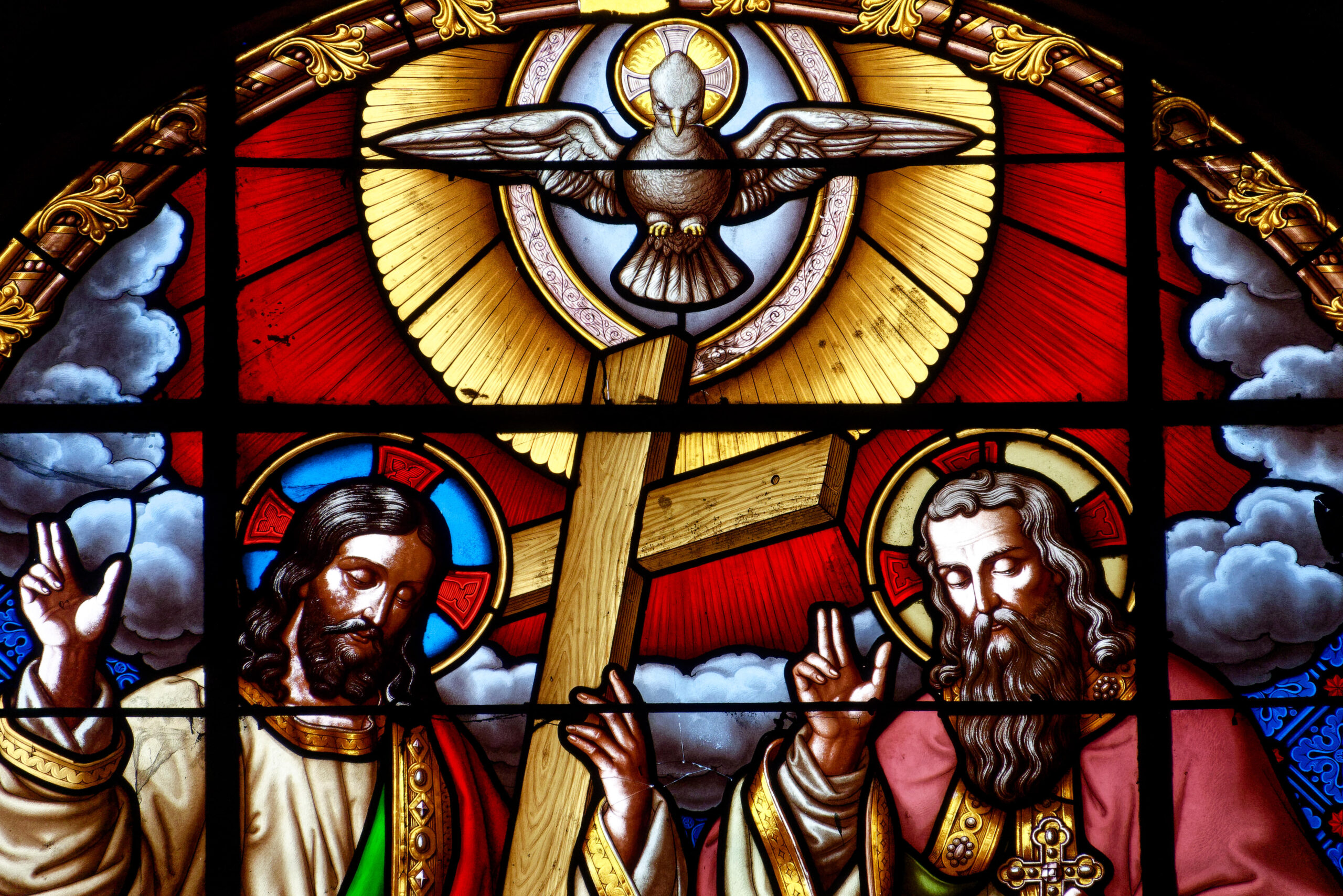
Let’s take, for example, the doctrine of the Trinity: that term doesn’t really come about until people start challenging the relationship between the Father, Son, and Spirit. The first real use of the term “Trinity” as a way to describe it comes in the late 100’s, but it comes from decades of reflection by the Church on the mystery of who God is. That doctrine tells us that we can understand that God is Triune, and we profess that belief in the Creeds and the Sign of the Cross. But can we ever fully comprehend that mystery? If we could, then that would actually put us above God.
In fact, even if you did absorb everything that human beings have ever written about the Trinity through the centuries, you still wouldn’t “know” all there is to “know”, because new insights into this one mystery will continue to emerge the longer the Church reflects upon it. And none of it will contradict what the Church already believes, but rather further illuminate it.
An analogy from the world of medicine might bring it down to earth a bit: medical research learns more about the brain every day, but the brain remains a mystery. In fact, we know very little about the total workings of the human brain. But everything we learn will build on what we already know about the human brain. It is highly unlikely that the medical world will wake up one day and say, “we’ve been wrong this whole time, the brain is located in the kneecap,” or something like that. And while it’s the job of experts to research and explain what the brain is and how it works, and further unpack its mysteries, the job of most of us is just to realize it’s there, and use it in everyday life the best we can.
Depending on our faith backgrounds, some of us have come from places where there was an emphasis on simply believing and not asking questions. In the Catholic Church, however, between St. Augustine and St. Thomas Aquinas and St. Teresa of Avila and a whole bunch of others, we have example after example of witnesses who prove that the Church is not afraid to ask complex and difficult questions about God.
But we also are part of a Church that through the centuries has been full of beautifully holy men and women who had no formal education whatsoever. In fact, Jesus chose an uneducated fisherman, Peter, as its first earthly leader. So learn and absorb what you can; but realize that the ultimate question is not, “can I know everything there is to know about Catholicism?” But rather, “do I trust that the best way to be in relationship with Jesus is in His Church?” At the end of the day, it’s that relationship that will carry you forward in ways that mere studies cannot.