One of the great blessings of being Catholic is the way in which the Church, guided by the Holy Spirit, helps us to sanctify our time and attention through recurring liturgical seasons. We have seasons that are “ordinary,” seasons for penance and mourning as we recently concluded in Lent, and we have seasons of joy. As we conclude the 50 days of this Easter Season, the “feast of feasts” (CCC 1169) and greatest of the Christian seasons of joy, we celebrate what J.R.R. Tolkien called the “eucatastrophe of the story of the Incarnation”—the joyful surprise that, just when all hope seemed lost, Jesus rose again victorious over sin and death. He has risen! Alleluia!
For many members of the Coming Home Network, these weeks after the Easter Vigil are moments of intense joy and discovery as they begin their life in full communion with the Catholic Church. However in the years to come, as we celebrate the Easter season again and again, at least some of the excitement will begin to fade. It is then that a more subtle aspect of these recurring seasons of fasting and feasting, mourning and joy, will begin to come to light. Easter, as a season of joy, is not just a time of passive celebration but a time of active formation in Christian joy.
Why do we need formation in joy? It seems an odd thing to say. Isn’t joy just something that happens to us? When we speak of “joy” we’re not talking about mere bodily pleasure or temporary gratification. Joy is not dependent on our physical circumstances, which is why it can be present even in the context of great suffering and uncertainty. The true joy for which we were originally created and destined is the result of friendship with the Lord. This side of heaven, while the journey continues, the cultivation of this friendship and growth in Christian joy is something that requires conversion, practice, and perseverance.
Consider, if you will, that familiar exhortation from Saint Paul’s letter to the Philippians: “Rejoice in the Lord always; again I will say, Rejoice.” (4:4) Contrary to how we sometimes think of it, joy is presented here not as something for which we are to just wait around passively hoping it will show up. Rather, we are exhorted to “rejoice”—that is, to actively seek our delight and fulfillment in the Lord. That we struggle to rejoice—to find joy in the God of the universe who loves us—this is, in a sense, our deepest human predicament, the root of our restlessness and our sin. We constantly seek and grasp for joy in things that we know cannot and will not satisfy: mere sensual gratification, power, possessions, the attention and praise of others, and in the end our own self-will and self-esteem. At the same time, when we do turn to face that which we know, rationally, is truly “enjoyable”—the almighty God, the giver of all good gifts—we find ourselves often nonplussed. Perhaps we do not desire joy as much as we thought we did. As C.S. Lewis noted in his famous sermon, The Weight of Glory:
“It would seem that Our Lord finds our desires not too strong, but too weak. We are half- hearted creatures, fooling about with drink and sex and ambition when infinite joy is offered us, like an ignorant child who wants to go on making mud pies in a slum because he cannot imagine what is meant by the offer of a holiday at the sea. We are far too easily pleased.”
As the result of sin, both original and personal, we seek joy in all the wrong places, and even when we find it we are “halfhearted” in our desire.
God is calling us back to joy, but it will require our obedience, both in seeking the Lord and in accepting his discipline. To rejoice in the Lord is the vocation and destiny of the Christian soul. We were created for happiness, for beatitude—”to know, to love, and to serve [God], and so to come to paradise” (CCC 1721). Over and over, throughout the Old Testament, God reiterates in a hundred ways his invitation to peace, life, fulfillment, love, and the joy of salvation to his hard-hearted people: ”O that my people would listen to me, that Israel would walk in my ways!” (Ps 81:13). At long last, in His great mercy, through the incarnation, Christ comes in the flesh to renew His Father’s invitation and to show us the way:
By this my Father is glorified, that you bear much fruit, and so prove to be my disciples. As the Father has loved me, so have I loved you; abide in my love. If you keep my commandments, you will abide in my love, just as I have kept my Father’s commandments and abide in his love. These things I have spoken to you, that my joy may be in you, and that your joy may be full. (Jn 15:8–11)
The Christian journey is, in a sense, a lifelong “rejoicing” process through grace. Jesus came precisely to make this full joy possible: showing us that the resurrection of our joy—our true rejoicing—emerges only after we surrender and submit to the way of the cross.
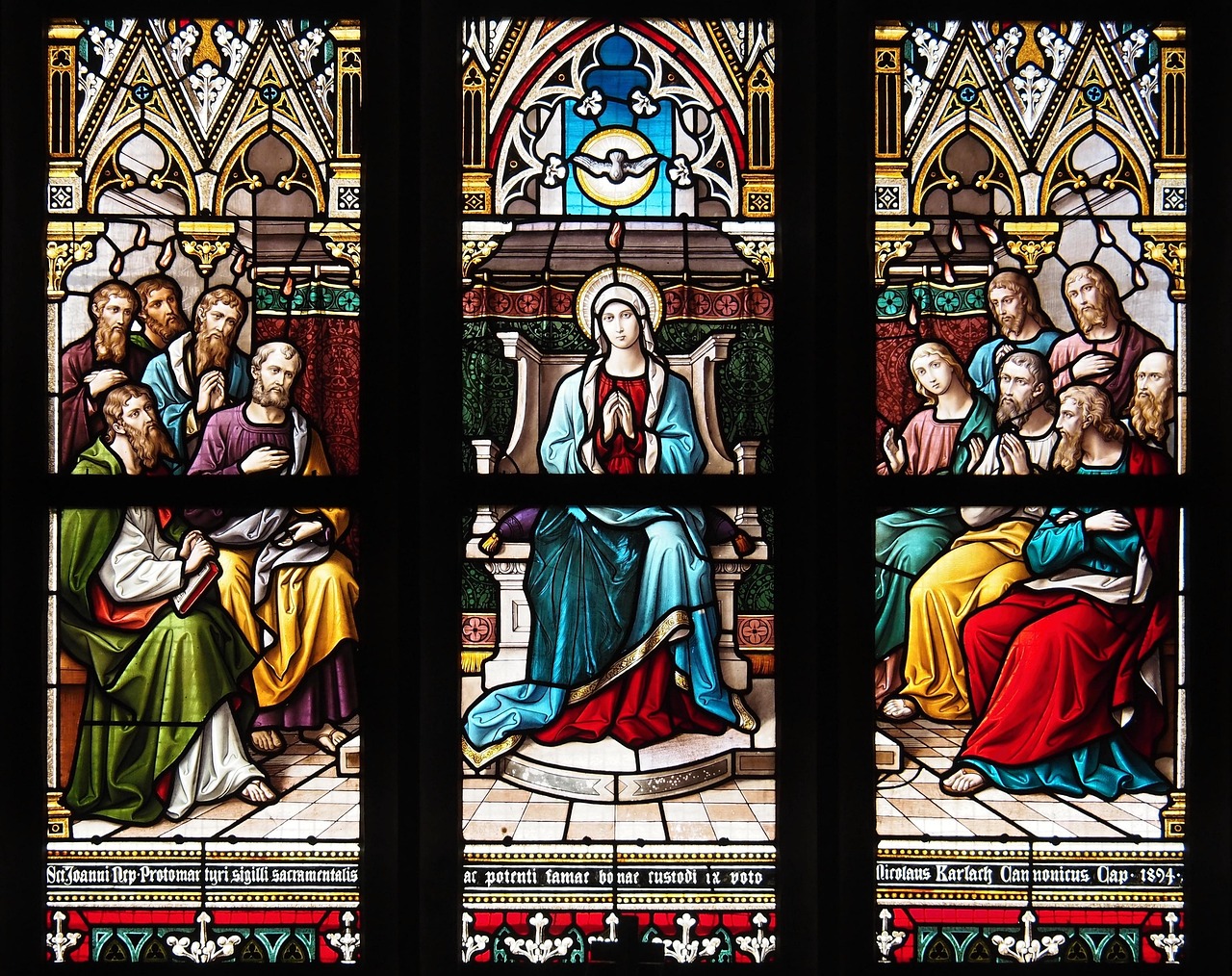
As we conclude these 50 days of the Easter season of rejoicing, let’s keep in mind that the celebration is formation. We precede this season with a time of mourning for our sins, submitting to discipline, and detaching our hearts from distractions. But Lent is not enough! With the Risen Christ, we enter into Easter joy, not as passive spectators, but as active participants, freely responding to the exhortation to rejoice in the Lord. It is a time for purposeful celebration with family and friends, for persevering in prayer, and for drawing nearer to Jesus in the Holy Eucharist as the source of our abiding joy. And when this season draws to a close at Pentecost, may we resolve to carry this rejoicing with us always—even as we return to Ordinary Time.