The Catechism of the Catholic Church provides a brief description of three expressions of prayer: Vocal Prayer, Meditation, and Contemplation (CCC 2700- 2724). Vocal prayer involves expressing oneself to God either silently or audibly; meditation has to do with reflecting intentionally upon the mysteries of faith; and contemplation, sometimes referred to as the “prayer of presence,” is perhaps best described in Psalm 46:10—”be still and know that I am God.”
In my experience as an Evangelical Christian growing up in the 1980s and 1990s, I was really only conscious of two expressions of prayer; praying aloud (usually in the presence of other Christians), and what we called “praying in the silence of our hearts,” which was actively talking to God but without saying audible words. Both of these, I would come to discover, fall under the umbrella of Vocal Prayer in the Catholic tradition; and I was more than a little dismayed to learn that Meditation and Contemplation were both considered higher expressions!
That’s not to say that I never engaged in Meditation (certainly I did when reading the Scriptures), or even Contemplation (such as when a worship leader or pastor would ask us to quiet our hearts and place ourselves in the presence of God), but Meditation, as a term, had a negative connotation in my world because some of the Christians from the generation before me had been “born again” after experimenting with Transcendental Meditation. Contemplation, on the other hand, I do not recall being used explicitly to describe a specific prayer style at all.
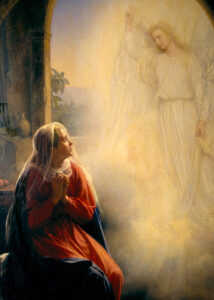
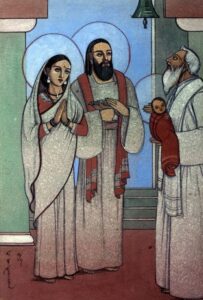
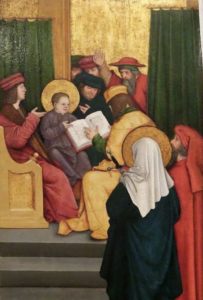
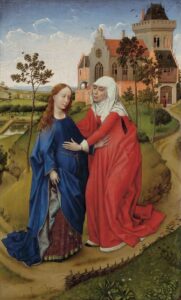
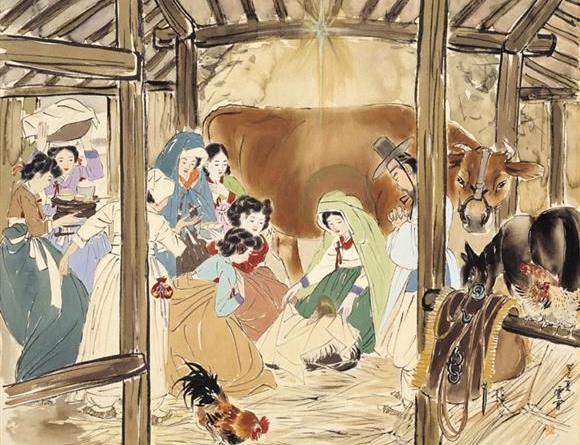
As I began to make my way towards the Catholic Church, I knew I wanted to try my hand, or at least my thumbs, at the rosary. However, because I was still trying to sort out the distinction between Vocal and Meditative Prayer, I found it difficult at first; how could I make my brain focus on one of the Mysteries when my mouth was doing all the talking? Amid all of this, my wife-to-be got me a book by the late Fr. Benedict Groeschel, The Rosary: Chain of Hope. The power of the book, for my specific situation, was in its selection of classic depictions of the mysteries of the Rosary as painted by some of the greatest sacred artists in the Church’s history: The Annunciation by Carl Bloch, Carracci’s Flagellation of Christ, Giovane’s Wedding at Cana. Soon, I found myself focusing on the images and placing myself in the scenes beside Jesus and Mary, with the repetitive prayers serving as a rhythmic anchor to help my mind stay with each mystery. Ever since, I’ve tried, whenever possible, to find visual depictions of the mysteries of the Rosary to aid my meditation.
Through the CHNetwork Online Community, we’re blessed to host a live Rosary on a Zoom video call every Monday afternoon for all of our members, but especially for those who are just getting started with the Rosary, and are perhaps having the same difficulties I’ve experienced.
Selecting the art to go along with our Monday afternoon Rosary has quickly become a highlight of my week!
If you’re interested in praying the Rosary with us each Monday, or in our other weekly prayer and fellowship opportunities, we would love to have you join us online at chnetwork.org/onlineevents.